What do I need to make a locate request?
What happens next? How do I dig safely?
What’s your project? Shallow or deep, big or small—contact 811 before you start.
1
Contact 811
Getting started is simple and quick.
Have your project details handy.
Physical address where you’ll be digging
Your email address for confirmation of your ticket and communications
Closest intersecting street to the address
How locators can access the property
Type of digging you are doing
Location on the property where you’ll dig
Then, submit your request online or call 811.
Start Your Request3
Respect the Utility Line Marks
Underground public utility lines will be identified by paint, flags, or both.
Be sure marks remain visible for the full duration of your project. They are there to protect you, the dig site, and your team.
Color Codes: What do they mean?
Utility locators marks lines with paint, flags, or both using a standard color code system created by the American Public Works Association (APWA).

4
Follow These Tips to Dig Safely
Always use extreme care when digging near underground utilities.
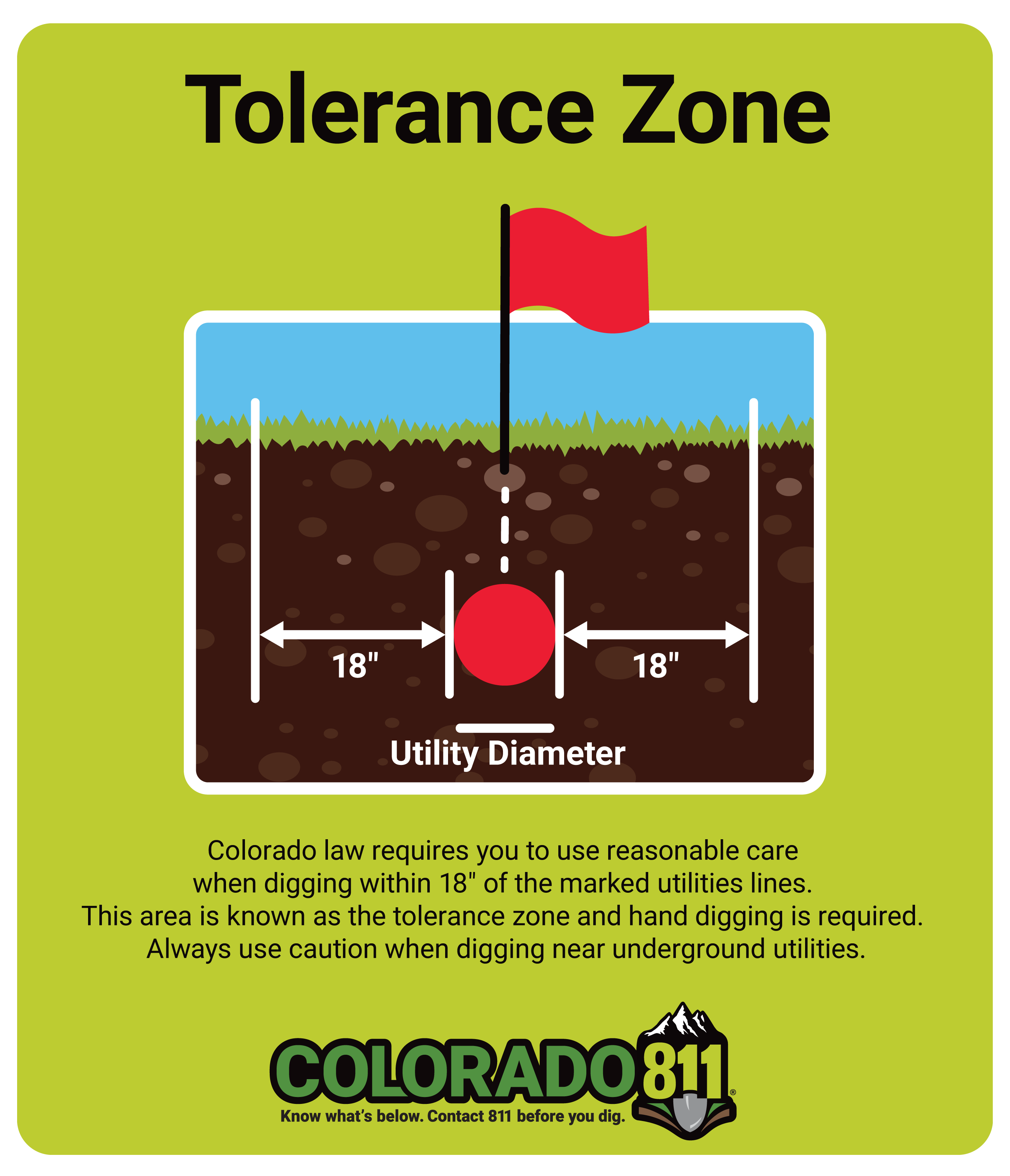
Be aware of the Tolerance Zone.
The area within 18 inches of utility marks in every direction is called the tolerance zone. In this zone, dig only by hand, if at all.
Remember: The depth of utilities varies.
Underground utilities, pipes, or cables are buried at different depths depending on the location and type of utility. Over time, depth can change because of erosion or leveling.
You’ll see an indication of depth only if the utility locator actually knows that information.
5
Request Renotification
If any locates are incomplete, missing markings, unfound utility, or discrepancy in Positive Responses, submit a renotification request.
To submit a renotification the following criteria shall exist (otherwise a new request must be processed)
There was an original ticket processed
It is not more than (five) 5 business days after the original Locate By Date
Positive Response has been verified
Utility not found in located area (It is not more than thirty (30) days after the original Locate By Date for this reason only)
Why Contact 811? It’s the Law.
Don’t put yourself at risk. If you don’t call you could face:
Injury, in some cases, fatal
Expensive property and environmental damage
Natural gas explosion or fire
Disrupting essential utility service to you and your community
Job delays
Legal consequences
Still have questions?
We're here to help.
Contact Us